
Le Mans Mini Marcos - at the 1967 London Racing Car Show

One-off Méan Sonora spotted at Spa

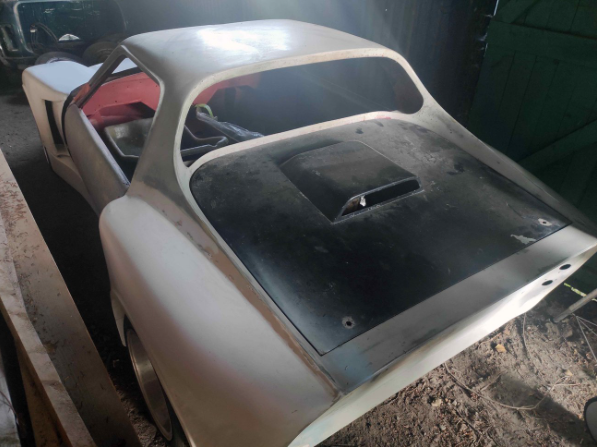
An unbuilt Kingfisher Sprint is unearthed




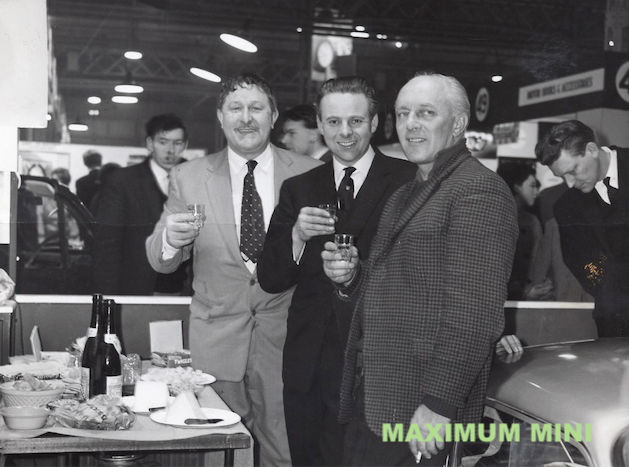
I have found some new pictures of the two Unipower GTs that were on display at the 1967 Racing Car Show, and several of these show our lovely model Monika Dietrich in the cars and notably on their bonnets. Yes, some of these have been shown here before. But hey, with these new ones, why not show these again and now the whole collection of them?
Monika Dietrich was born Monika Haberkamp in Cologne, Germany but came to London in the mid-1960s as an au-pair before she was asked to model for a number of advertisements. She had a few minor movie roles also and I understand she is still going strong.
The Unipower GTs on display at the '67 Racing Car Show were the ones wearing chassis number 1 and 9 and are both still alive and well also. The red car (number 1) is owned by Tim Carpenter, who takes it out to events and shows regularly; the white one (number 9) is a competition model, which was purchased by Jan Odor of Janspeed fame in '67 and was raced by Geoff Mabbs under the Janspeed banner before being sold to Cars & car Conversions magazine and repainted in red a year later. Like Tim's car it has been fully restored, too.
UPDATE 13 March: Unipower GT Owners Club & Register front man Gerry Hulford contacted me and he's not amused. He is convinced the red car is not chassis number 1 but chassis number 8. He may very well be right but I am not sure.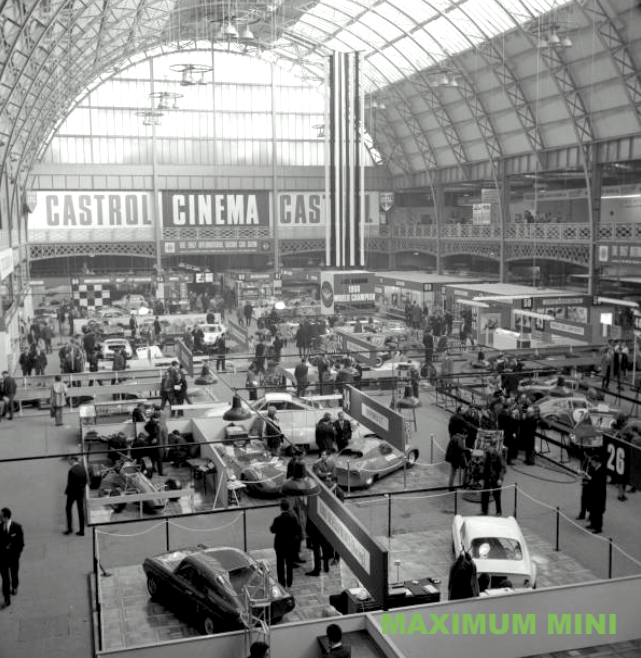


Following Barry Stimson's death on the last day of 2022 (click) this is another part in a series of interviews with the designer. This time about marketing the Stimson Mini Bug in print, on the motorshow and on television. "It was exactly like you’d do a documentary about the swinging sixties" Over to the late Barry:
"We went to France to get the pictures for the Mini Bug brochure. It was unbelievably fun to drive the vehicle there. You know it was in 1970 and not all the bloody tourists were there yet. The girl I took with me was Patsy and she can be seen in the brochure. She was known as one-eyed Patsy since she had just one eye, which you can't see because she's wearing sun glasses on the pictures. But she was a lovely soul. And a tough cook, too."
"The car on the Racing car Show stand still was the same car, I think. So much was happening at the time. Jem cars came to me because they’d seen the Mini Bug on television. Can we be agents for the Mini Bug, they asked. They seemed really nice people. The Mini Bug was also used on the Cliff Richard Show and Olivia Newton John was filmed in it driving it and then in studio shots with a wind machine whilst singing. It was also in a television series The Freewheelers (footage here). They asked me to talk about design on radio and tv – it was usually William Towns or me who was asked. The trouble is that in those days everything was shot on 16mm film. And although the BBC transferred a lot of the stuff; they scrapped a lot of it, too. There was also footage shot on the beach of Littlehampton for a motoring programme named Wheelspin. They just hired a helicopter and went filming for a complete day." (footage does survive though - see here).
"They were supposed to be difficult times but it didn’t affect me in the slightest. It was pure fun. A mate was stage manager of the musical Hair and another friend was Julia Goodman who was an actress. It was all fun, exactly like you’d do a documentary about the swinging sixties. It was all promo girls and Champagne celebrations. Meanwhile, I’d got involved with Ian Smith, who wrote The Lotus Story. He knew all sorts of people who said to me he wanted to get in business; we can sell lots of these - that sort of thing. That’s how Barrian Cars was formed, after my and Ian’s names. He was friends with people like Graham and Betty Hill and Colin Chapman. Rosalyn, Ian’s wife and I flew to Monaco for a promotional thing. Ian drove the bloody Bug to the south of France. Over there I was introduced to all the people and we had diner and all the rest. Ian clearly wanted to introduce the car to other people there and it was intended to drive the race circuit at Monaco with Jacky Stewart behind the wheel. But David Benson, a Daily Express journalist, took it on the course first and stuffed it into a wall. The wall fell onto a person working on the other side of it and there was a lot of commotion. They wrote it off and it had to be shipped back. I had to spend another two days with one of the girls, which wasn't too bad."
"Ian Smith also was a member of the Dog House club in Mayfair and I went there too, to meet up with some of these people. I wasn’t all too impressed, but it was agreed that Barrian Cars would give a Mk2 Mini Bug to the club for charity and they were raffling it off. The car got built but I wasn’t in a position to donate a kit to a bloody charity, I didn’t have any money, so eventually Lord Stokes of BMC supplied us with a brand new engine and sent it off. But when it came here there was no distributor cap and there other bits missing and so I phoned them up. A couple of days later, I had by now completely forgotten about it, a box was sent over which contained 20 distributor caps, 100 spark leads, five carburettors and all other sorts of parts. I rang them to tell them there were way too many parts and they told me these parts came in boxes of twenty or ten or whatever and there was no union job to take things oút of boxes. This is how British Leyland went under, maybe..?"


We've seen how the Deep Sanderson 301 prototype came about (click here) and LawrenceTune Engines Ltd. then took the car to the 1962 Racing Car Show. From that year's show guide: "The pride of place on the stand goes to the Deep Sanderson rear engined sports car. The car evolved directly from our last Formula Junior car and is of very advanced design. Suspension is all independent by Lawrence trailing link; engine is 1,000 cc transverse mounting; brakes are discs on the front and drums on the rear. The car is primarily for road use and will be sold in kit form at a very low price." The brochure showing the still unpainted car mentioned that price of 951 pounds, included taxes.
Was that price very low for a kit car? Some of the motoring correspondents visiting the show and writing about the Deep Sanderson must have thought so: 'Construction kit sports car of SIX GRAND' headed a Dutch newspaper, mentioning the price in Dutch guilders. An Italian magazine headed 'KIT COSTS A MILLION', referring to the price in Liras and calculating it more precisely at 1.128.750 Liras.
At least LawrenceTune Ltd. had nothing to complain about press coverage. Most reports praised the car's technical solutions, taken over straight from the press information, as they mentioned it was due for series production soon. Some of the quotes: "The Chris Lawrence monocoque system is just one of the novelties that mark his diminutive Deep Sanderson for more attention than most sports cars its size ever achieve", "Tiny bomb is said to do 0 to 60 mph in 9 seconds flat with a top speed of 107 mph", "The new Deep Sanderson sports car has stirred up quite a bit of interest at English club racing circles."
Let's have a look at those racing activities next.


